How to Use Free Bet Offers for F1: Extracting Value From Promotions
 Available in US
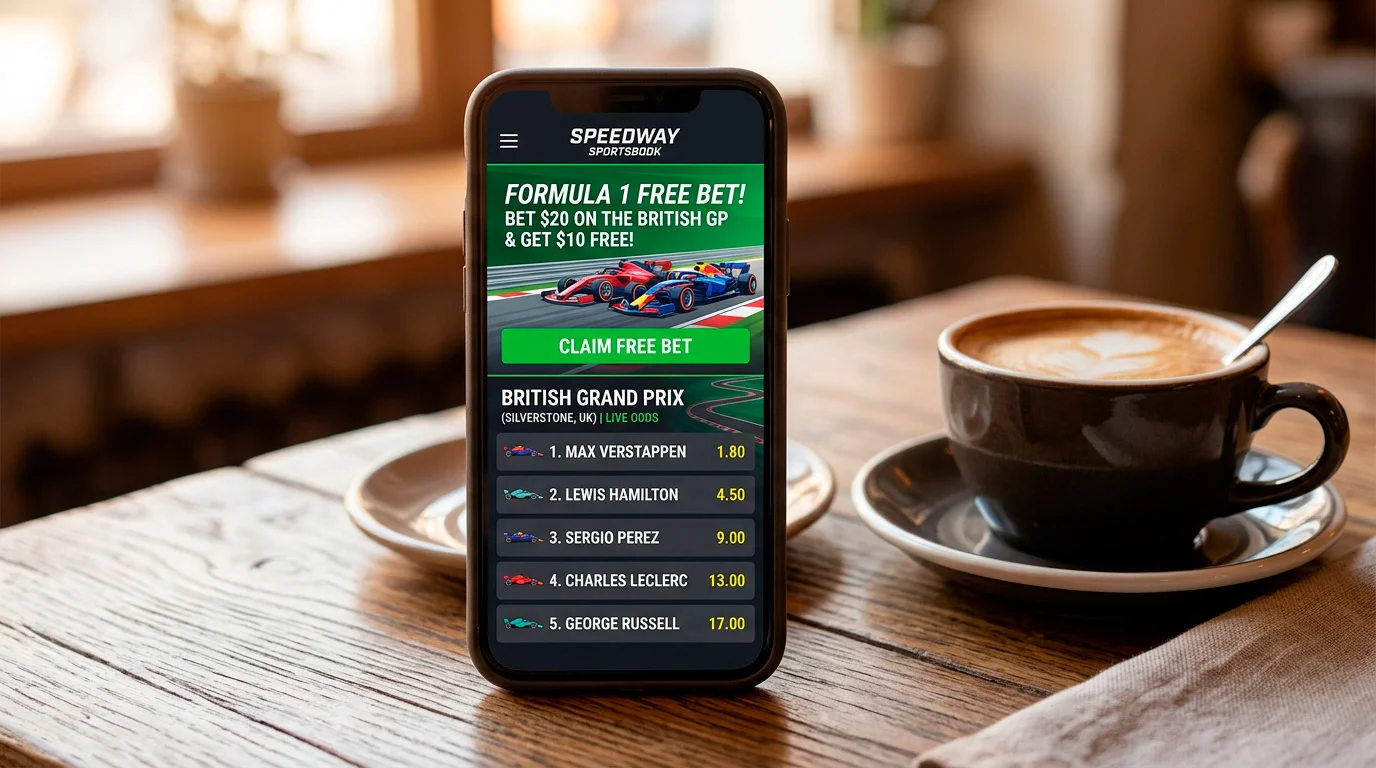
The Real Economics Behind Free Bet Promotions
Every Grand Prix weekend, my inbox fills with promotional emails promising free bets on the race. Most punters treat these as house money and throw them at the favourite to win, collecting a fraction of the potential value. I used to do the same thing until I sat down with a spreadsheet and realised I was leaving hundreds of pounds on the table every season.
Free bets are not gifts — they are customer acquisition tools with a precise cost structure. A bookmaker offering a ten-pound free bet knows the average recreational punter will return roughly 60-70% of that value through suboptimal placement. The remaining 30-40% is effectively the marketing cost of acquiring your account activity. Your job as a sharp bettor is to flip that equation, extracting as close to 100% of the face value as possible. UK betting participation sits at about 12% of the adult population, and operators compete fiercely for that slice, which is why F1 race weekends — high-profile, heavily marketed events — attract some of the most generous promotional offers of the sporting calendar.
See also: browse betting f1 for the best F1 bonus content.
Matching Free Bets to the Right F1 Markets
Not all markets are created equal when you are deploying a free bet. I learned this after wasting a free stake on a race-winner market at odds of 2.50 and wondering why my expected return felt so thin. The mathematics of free bet extraction hinge on one principle: the higher the odds you place the free bet at, the greater the proportion of face value you retain.
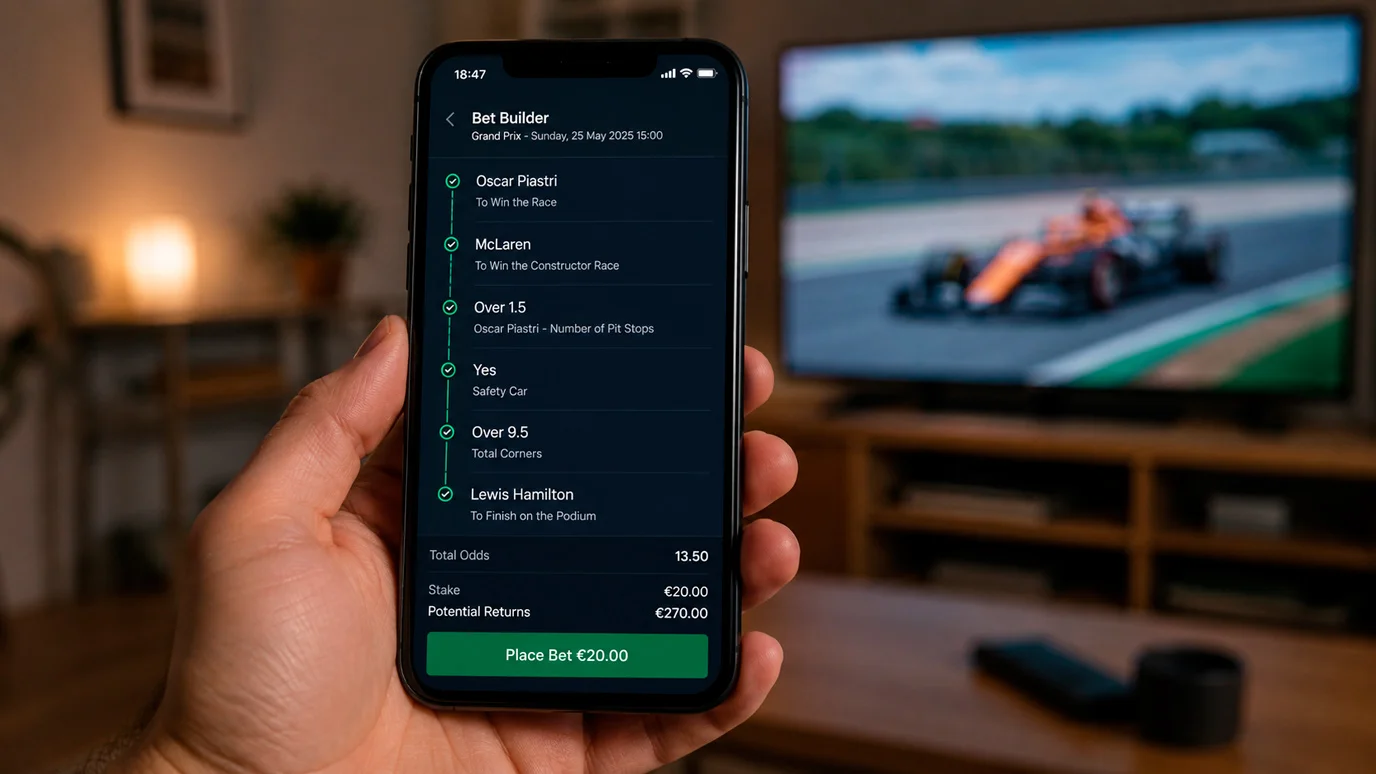
Here is why. A standard free bet returns only the profit, not the stake. If you place a ten-pound free bet at odds of 2.00, your profit on a win is ten pounds — a 50% retention rate. Place that same free bet at odds of 6.00, and your profit on a win is fifty pounds, pushing your expected retention above 80% when you factor in the implied probability. F1 markets are perfect for this because they naturally offer high odds across the field. A midfield driver to win the race might sit at 15.00 or higher, and even podium-finish markets for non-frontrunners routinely breach 5.00.
The sweet spot I have found over the years sits between odds of 4.00 and 8.00. Below 4.00, the retention drops to levels where you are essentially subsidising the bookmaker’s marketing budget. Above 8.00, the probability of the bet landing becomes so low that variance dominates — you will need many free bets before the strategy pays off statistically. F1 podium finishes, top-six markets, and qualifying position bets for midfield drivers consistently price into this range.
Stake-Not-Returned vs Stake-Returned: Why the Distinction Matters
I once spent twenty minutes arguing with a friend who insisted all free bets work the same way. They do not, and the difference fundamentally changes your strategy. A stake-not-returned free bet pays out only the winnings — the original free stake disappears regardless of outcome. A stake-returned offer gives you back both the stake and the profit, making it functionally identical to a cash bet in terms of return.
With stake-not-returned offers, which make up the vast majority of F1 promotions, your expected value calculation must discount the stake. On a ten-pound SNR free bet at odds of 5.00, your expected return is the win probability multiplied by the profit only — so 20% times forty pounds, which gives you eight pounds expected value. That is an 80% retention rate, which is excellent.
Stake-returned offers are rarer and significantly more valuable. The same ten-pound SR free bet at 5.00 yields an expected return of the win probability multiplied by the full payout — 20% times fifty pounds, or ten pounds. That is 100% retention, effectively free money. When these appear around major Grands Prix, and they do occasionally surface for high-profile races like Silverstone or the season opener, prioritise them above everything else in your promotional calendar.
Qualifying and Sprint Races as Free Bet Vehicles
Race-winner markets get all the promotional attention, but qualifying and sprint races are where I deploy most of my F1 free bets. The reasoning is practical. Qualifying outcomes hinge on a single flying lap, which compresses the variables compared to a 57-lap race where strategy, pit stops, and reliability all intervene. That compression means the odds more accurately reflect probability, and you can identify mismatches more reliably.
Sprint races add another dimension. With only around 100 kilometres of running, there is less time for the field to spread out, which means midfield drivers carry a higher probability of finishing in the points or achieving a top-six result. A free bet on a midfield driver to finish top six in a sprint regularly prices between 3.50 and 6.00 — right in that extraction sweet spot. The F1 calendar now features six sprint weekends, giving you half a dozen extra opportunities per season to deploy free bets in a compressed, high-value format.
For a closer look at how sprint race dynamics shape the odds landscape, the shorter format creates specific patterns that free bets exploit beautifully.
Turning Promotional Calendars Into a Seasonal Edge
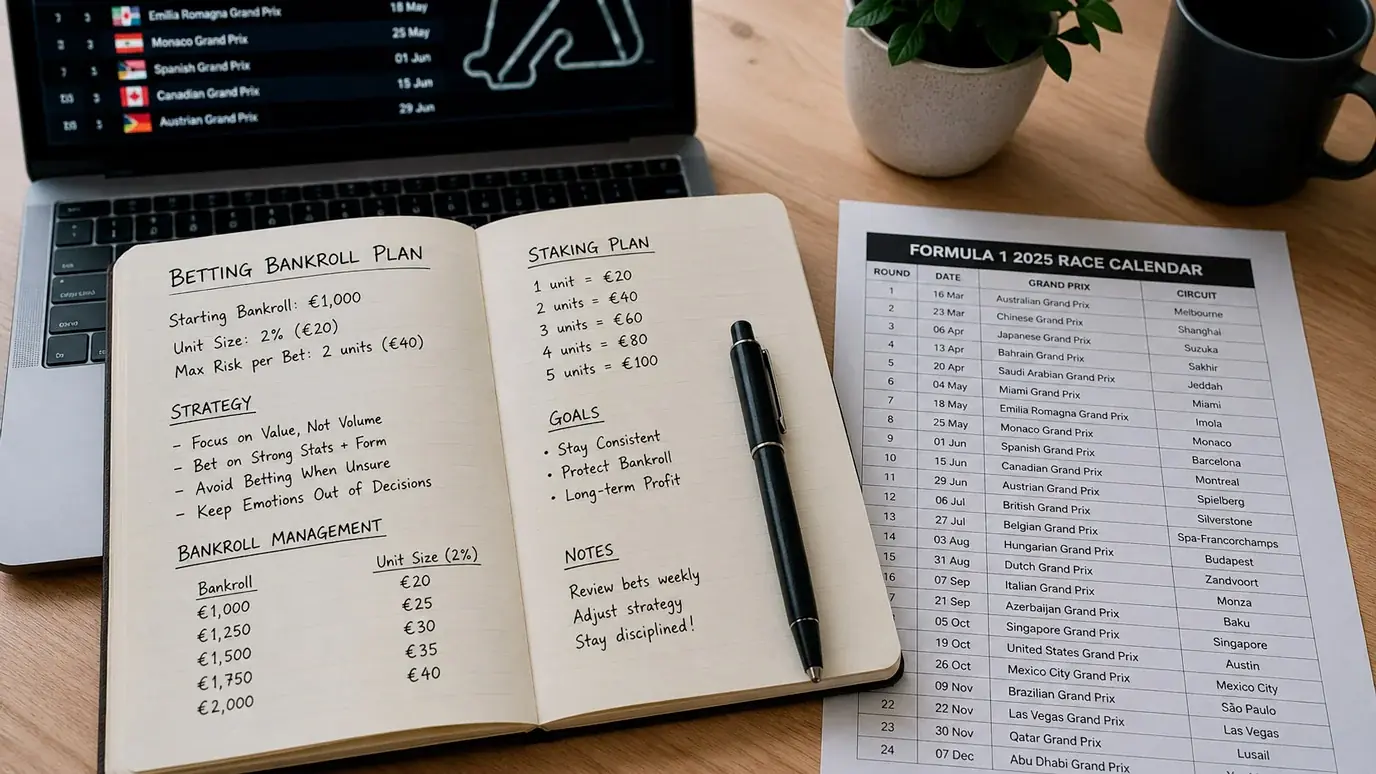
The punters who extract the most from free bet offers are not the ones who react to each promotion in isolation — they are the ones who plan across the season. With 24 races on the 2026 calendar and multiple bookmaker accounts active, the cumulative value of properly managed free bets can add hundreds to your annual returns without exposing your bankroll to additional risk.
See also: manage your free-bet stakes wisely with our F1 betting bankroll tips.
I maintain a simple tracking sheet that logs every promotional offer, its type (SNR or SR), the qualifying conditions, and the expiry date. Before each race weekend, I review what is available and match each free bet to the market where it delivers the highest expected retention. The discipline is in resisting the urge to lump free bets onto emotional picks. That midfield driver you secretly support might be a terrible free bet candidate if the odds do not fit the extraction model, no matter how satisfying a win would feel.
The broader landscape helps here too. F1 accounts for just 0.4% of the global betting handle, which means operators view it as a growth market and invest disproportionately in promotions to attract new motorsport bettors. That imbalance between promotional spend and actual handle volume creates a structural advantage for anyone approaching F1 free bets with a system rather than a hunch.
Are F1 free bets worth less than football free bets?
Not inherently. F1 markets often offer higher natural odds than football match results, which means the expected retention rate on a free bet can actually be higher. The key is matching the free bet to a market in the 4.00-8.00 odds range, which F1 provides more readily than most sports.
Should I always use free bets on the highest odds available?
Not necessarily. While higher odds increase retention percentage per winning bet, extremely high odds — above 10.00 or so — introduce so much variance that you may never see a return across a season. The optimal range balances retention rate against realistic probability of the bet landing.
Prepared by the Betting f1 editorial staff.