F1 Betting Markets Explained: Every Market a UK Punter Can Trade in 2026
 Available in US
- The Full Spectrum of Formula 1 Betting Markets
- Outright Markets: Championship and Season-Long Wagers
- Race-Weekend Markets: From Qualifying to Chequered Flag
- Prop Bets and Special Markets: Safety Car, Fastest Lap and Beyond
- Constructor and Team-Based Markets
- Head-to-Head Driver Matchups
- New and Emerging Markets for the 2026 Season
- Questions About F1 Betting Markets
The Full Spectrum of Formula 1 Betting Markets
I spent my first two years betting on F1 the same way most people do — backing a race winner, checking the result, repeating. It took me an embarrassingly long time to realise I was ignoring about 80% of the markets available on any given Grand Prix weekend. That ignorance cost me edges I did not even know existed.
The range of F1 betting markets in 2026 is wider than it has ever been, and it keeps expanding. Yet the sport still accounts for just 0.4% of the global betting handle — a figure Jonny Haworth, F1’s Director of Commercial Partnerships, called “pretty crazy for a sport the size of Formula One.” That gap between F1’s cultural reach and its betting footprint is closing fast. The global fanbase hit 827 million in 2025, a 63% increase since 2018, and bookmakers are responding with deeper market catalogues on every race weekend.
The online sports betting market is projected to reach $92.49 billion by 2031, and motorsport is one of the sectors with the most room to grow. For UK punters, that growth translates into more markets, tighter odds and better tools — but only if you know where to look.
This guide walks through every major category of F1 betting market available at UK-licensed bookmakers. I have organised them the way I think about them myself: starting with the big season-long positions, moving through race-weekend markets, then into the specialist props and matchups that often hold the most overlooked value. By the end, you will have a working map of every market you can trade across a 24-race calendar.
See also: visit betting f1 for comprehensive Formula 1 wagering resources.
Outright Markets: Championship and Season-Long Wagers
Before the first car turns a wheel in anger at pre-season testing, the championship outright markets are already live. I place more of my annual volume in these markets than anywhere else — not because they are easy, but because they are where patience gets rewarded most directly.
The Drivers’ Championship market is the headline. You back a driver to win the World Championship at odds set months before the title is decided. Early-season prices tend to be their most generous because uncertainty is highest: nobody knows which team nailed the new regulations, which driver partnership will click, or who will suffer reliability nightmares. The closer the season gets to its conclusion, the shorter the odds on the likely winner become, and the window for genuine value shrinks.
Then there is the Constructors’ Championship market — a team-based equivalent where both drivers’ points combine. I find this market consistently underrated by casual punters. A constructor bet gives you two bites at results every race, and mid-season car upgrades can shift constructor odds more dramatically than driver odds because a single technical breakthrough lifts both cars simultaneously. If you spotted a team’s upward trajectory early, the constructors’ market amplifies that insight.
Beyond the championship winners, most UK bookmakers offer top-three or top-four finish markets for both drivers and constructors. These are season-long wagers at lower odds but higher strike rates. I use them as anchor bets — positions I take early and hold, with occasional hedging through in-season race bets when the situation changes.
You will also find “race wins total” markets on certain platforms — over/under on how many races a specific driver will win during the season. These reward close followers of car performance trends and calendar scheduling. A driver might look strong overall, but if six of the next eight races suit a rival’s car, the under could hold value even on a championship favourite.
Season-long markets demand discipline. You are locking up capital for months. But the trade-off is that the odds available in February or March are almost always more generous than anything you will find in October, because the market cannot price in unknowns. That structural advantage is why I keep coming back to outrights every year.
Race-Weekend Markets: From Qualifying to Chequered Flag
Race weekends are where F1 betting gets dense. Between Friday practice, Saturday qualifying (and sometimes a sprint), and Sunday’s Grand Prix, a single weekend can serve up a dozen or more distinct markets — and they shift constantly as new data arrives.
The race winner market is the most straightforward: pick the driver who crosses the line first. Odds are typically available from midweek, tighten after qualifying, and move again during the race itself for in-play punters. What many new bettors miss is that race winner odds after qualifying often price in grid position more heavily than underlying pace. A driver who qualifies fifth after a messy Q3 lap but showed the fastest long-run pace in practice can represent real value in the race winner market — if you were paying attention during those practice sessions.
Podium finish — or top-three — markets lower the bar. Instead of needing your driver to win, you need them in the top three. I lean on these when the front of the grid is congested and three or four drivers have a realistic shot at winning. Rather than guessing which of them nails the start or gets the strategy right, a podium bet captures all three finishing positions. The odds are shorter, naturally, but the probability of collecting is significantly higher.
Qualifying markets deserve their own attention. Pole position betting is offered by every major UK sportsbook, and most also carry top-three qualifying, group matchups within qualifying sessions, and Q1/Q2 elimination props. Over 30% of F1’s digital audience interacts with betting-related content during race weekends, and a big chunk of that activity clusters around qualifying because results come fast — a single lap decides the market.
Fastest lap is another race-weekend staple. Since the bonus championship point was introduced for the fastest lap (provided the driver finishes in the top ten), this market has become far more strategic. Teams on the radio now explicitly tell drivers to pit for fresh tyres and chase the fastest lap if the gap is safe. That changed the market dynamics completely — it is no longer random, it is tactical, and understanding tyre strategy is key to finding an edge.
Points finish markets ask whether a named driver will finish in the top ten. These are particularly interesting for midfield runners where the odds can be generous. If you track qualifying trends and know which circuits reward overtaking (versus those where grid position is almost everything), you can find consistent value in the points finish market across a season.
Finally, there are retirement and DNF (Did Not Finish) markets. You can bet on whether a specific driver will retire from the race, or on how many drivers will fail to see the chequered flag. Reliability data matters here — some power units run hotter at high-altitude circuits, certain gearbox configurations struggle at street tracks, and early-season races tend to produce more mechanical failures as teams push the limits of untested components.
Prop Bets and Special Markets: Safety Car, Fastest Lap and Beyond
There was a race in 2023 — I will not bore you with the specifics — where I ignored the safety car market entirely because I thought it was a novelty. The safety car came out twice, reshuffled the entire field, and I watched my race winner bet collapse while the safety car “yes” market paid out handsomely. That was the last time I treated props as an afterthought.
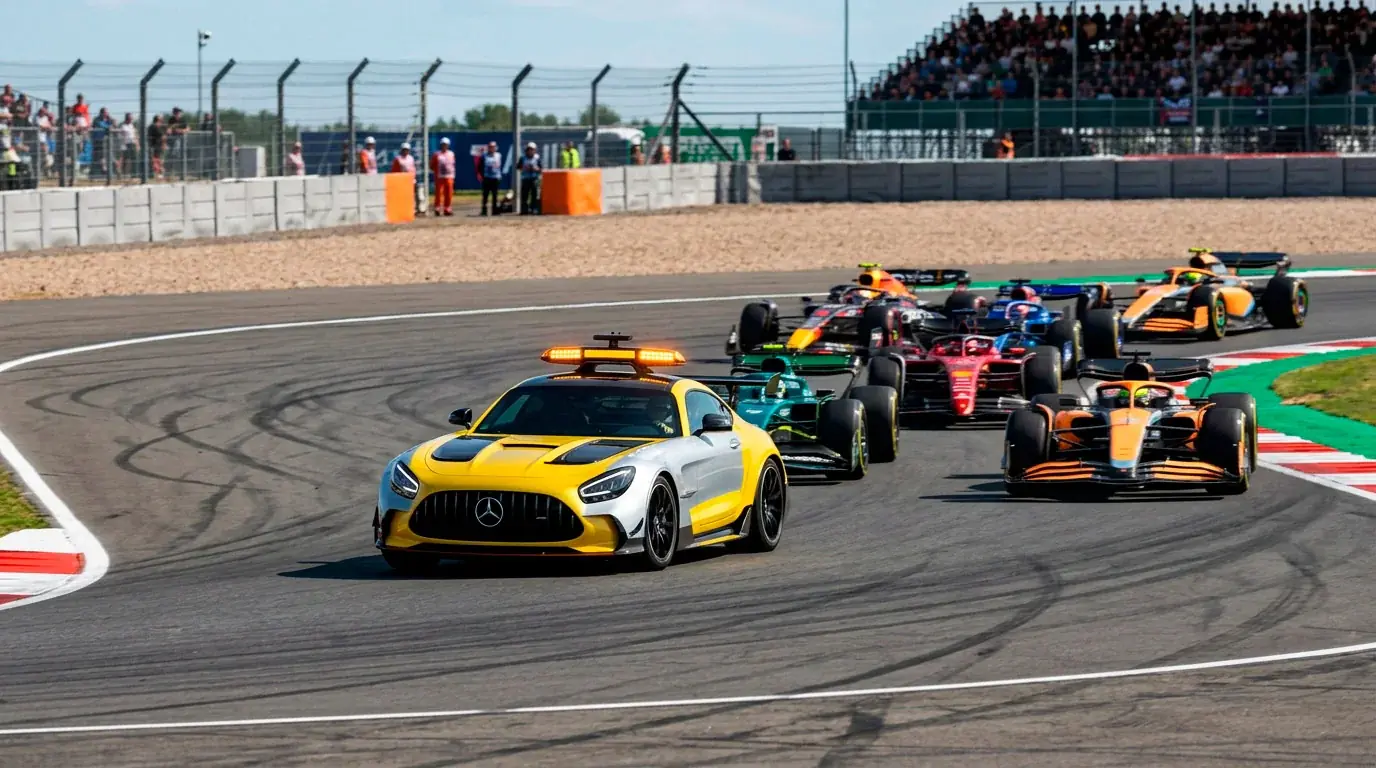
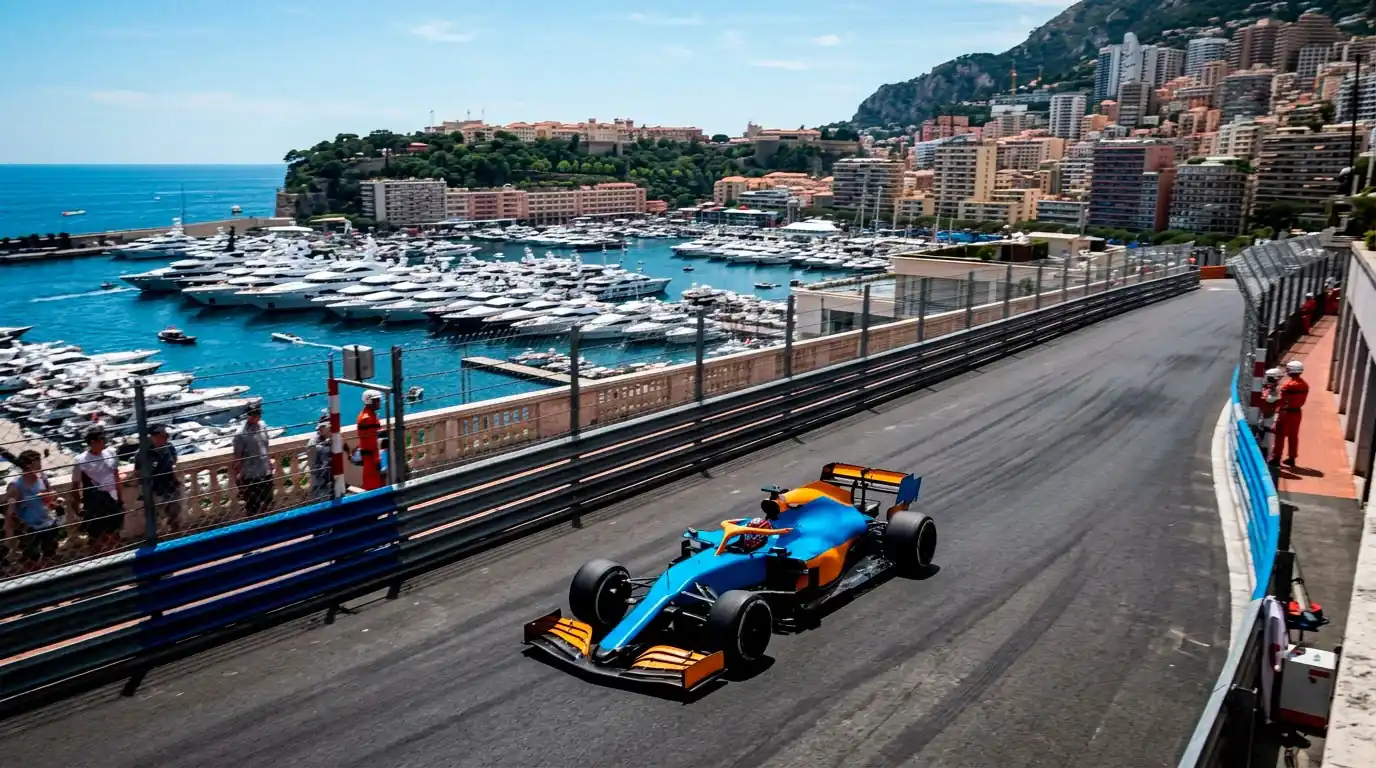
Safety car markets are the most popular prop in F1 betting. The simplest form is a yes/no bet on whether a safety car will be deployed during the race. Some bookmakers go further, offering over/under on the number of safety car periods, or timing-based props like “safety car in the first 10 laps.” Street circuits — Monaco, Baku, Singapore, Jeddah — historically produce safety cars at much higher rates than wide-open venues like Monza or Silverstone. Knowing the circuit’s history shifts the value calculation considerably.
Virtual Safety Car (VSC) markets function similarly but are priced separately because the VSC is deployed for less severe incidents and has a different impact on race strategy. A full safety car bunches the field together and creates overtaking opportunities at the restart; a VSC merely slows everyone proportionally and maintains gaps. That distinction matters for in-play bettors who are watching other markets simultaneously.
Red flag markets — whether the race will be stopped entirely — are rarer but available at certain bookmakers. These tend to pay longer odds because red flags are uncommon outside of wet weather or major incidents.
Mark Wrigley, F1’s Head of Betting, has talked about the sport’s ambition to bring the betting product to a level where there has not been investment before, describing it as “loads of green field.” That mentality is visible in the expansion of prop markets. Classified drivers (how many will be running at the finish), the margin of victory (in seconds), and pit stop-related props (over/under on total pit stops, which driver makes the first stop) are all becoming more common. Some bookmakers now offer props on whether a specific driver will lead a lap, or whether the race will feature a particular number of overtakes.
The appeal of props is that they often depend on different variables than the race winner market. You do not need to know who will win to have an informed opinion on whether there will be a safety car at Baku or whether a specific team will attempt an aggressive one-stop strategy. That independence makes props useful both as standalone bets and as legs in bet builders.
Constructor and Team-Based Markets
Constructor markets get less attention than driver markets, which is exactly why I like them. Most casual F1 bettors think in terms of individual drivers — who is fastest, who is on form, who had a good qualifying. But F1 is a constructor championship as much as a drivers’ one, and the team dynamic creates distinct betting angles.
The most common constructor market is the race-day “constructor points” or “top team” bet: which constructor will score the most points in a given Grand Prix. This is effectively a combined bet on both drivers. If one driver has a bad day — a penalty, a poor start, a mechanical issue — the other can salvage the team’s weekend. That buffer makes constructor bets less volatile than backing a single driver, though the odds reflect that lower variance.
FanDuel’s appointment as F1’s first official betting operator in 2026, covering the United States and Canada, signals that official F1 data partnerships are coming to the betting product in a serious way. As those data integrations mature, constructor-level markets are likely to deepen. Real-time pit stop performance data, tyre degradation telemetry and car pace differentials between teammates all feed into how constructor odds should be priced — and right now, much of that information is available to attentive punters before the bookmakers fully adjust.
Season-long constructor matchups — which of two named teams will finish higher in the championship — are a niche but valuable market. I have found consistent edges in midfield matchups where one team has a stronger car but weaker driver lineup, or vice versa. The upgrade cycle matters enormously: a team that introduces a major floor update at the Spanish Grand Prix can leap three positions in the constructors’ standings within two races, and if you spotted the signs early, the matchup odds were still generous.
One thing to watch in 2026: the regulation reset means every team starts from a new technical baseline. Historical constructor performance is less predictive than in stable-regulation years. That uncertainty widens the odds across the board, which is exactly the environment where informed bettors can find the most mispriced constructor markets.
Head-to-Head Driver Matchups
If I had to recommend a single market type to someone new to F1 betting, it would be head-to-heads. They strip away the noise of a 20-car grid and reduce the question to its simplest form: will Driver A finish ahead of Driver B?
Teammate head-to-heads are the purest version. Two drivers in identical machinery, same strategy options, same pit crew, same data. The only variables are talent, form and luck. This is where driver skill matters most, and it is where consistent patterns emerge. Over a season, the stronger teammate tends to assert dominance, and qualifying data is a powerful predictor. If one driver has outqualified their teammate at eight of the last ten races, the head-to-head odds for the next race often still do not fully reflect that trend.
Cross-team matchups are more complex but equally interesting. The bookmaker picks two drivers from different teams — say, a midfield driver versus a front-runner’s second driver — and you pick who finishes higher. These markets reward knowledge of relative car performance at specific circuits. A driver in a slower car at Monza might actually be favoured at Monaco if the car’s downforce characteristics suit the street circuit better. The key is recognising when the bookmaker’s pricing assumes linear performance across all tracks, because F1 performance is anything but linear.
Settlement rules on head-to-heads vary between bookmakers and matter more than you might think. If one driver does not finish, some bookmakers void the bet; others settle in favour of the driver who completed more laps. A few treat any classified finish as a valid result regardless of how many laps behind the leader a driver finished. Before placing a head-to-head bet, I always check the specific rules at that bookmaker for DNF scenarios — it has saved me from unpleasant surprises more than once.
Only 22% of F1 fans who bet have actually wagered on motorsport in the past twelve months — motorsport ranks just eighth among betting categories. Head-to-head markets are one of the simplest ways to close that gap, because you do not need deep knowledge of odds formats or exotic market types. You just need an opinion on which of two drivers will beat the other, and a willingness to back it.
New and Emerging Markets for the 2026 Season
Every regulation change in F1 history has eventually produced new betting markets, and the 2026 overhaul is the biggest technical reset in a generation. The correlation between F1 viewership and betting volume has been measured at r=0.85 over the 2020-2025 period — when more people watch, more people bet, and more markets become viable for bookmakers to offer.
The Overtake Mode system — where drivers can manually activate a burst of additional electrical power from the new 50/50 hybrid power unit — is the single biggest new variable for in-play markets. How many times a driver deploys Overtake Mode, when they deploy it, and whether they use it for attack or defence are all data points that will feed into new prop markets. Some bookmakers are already exploring “Overtake Mode activations” as a race-day prop, though liquidity in these markets will take time to build.
Active aerodynamics introduce another layer. The 2026 cars feature adjustable aerodynamic elements — X-mode for higher downforce in corners, Z-mode for lower drag on straights. Strategy around when to switch between modes adds a new dimension to in-play betting that did not exist under previous regulations. A driver managing their aero modes aggressively might gain a short-term pace advantage at the cost of energy depletion later in the stint. For bettors watching the race closely, recognising those patterns early creates edges in the live betting markets.
The arrival of Cadillac as a new constructor and Audi’s takeover of Sauber also generate fresh markets. Pre-season futures on new teams are inherently wide because there is no performance baseline. In previous regulation changes, new or restructured teams have ranged from immediately competitive to years of struggle — there is no reliable template. That uncertainty means the bookmaker is guessing too, and their margins tend to be wider on new-entrant markets, which paradoxically can create value on both sides of the bet.
Sprint race markets continue to evolve as well. The sprint format condenses a race into roughly one-third the distance of a Grand Prix, which compresses strategy options and amplifies the importance of the start. Sprint-specific markets — sprint winner, sprint fastest lap, sprint head-to-heads — are now standard at most UK bookmakers, and the shorter race distance means in-play odds move faster and settle sooner.
I expect the 2026 season to be the one where F1 betting finally begins to match the sport’s cultural footprint. The ingredients are there: new regulations that create uncertainty, official data partnerships feeding better products, and a global audience approaching a billion people who are underserved by current betting offerings. The market catalogue in December 2026 will look noticeably different from the one available today.
See also: understand how bookmakers price races in our F1 odds guide.
Questions About F1 Betting Markets
What is the difference between outright and race-weekend F1 markets?
Outright markets cover the entire season — you are betting on who wins the Drivers’ or Constructors’ Championship, or on season-long totals like race wins. Race-weekend markets focus on a single Grand Prix event: race winner, podium finish, fastest lap, qualifying positions and similar. Outrights require patience because they settle at the end of the season, while race-weekend markets settle within hours or days.
How do safety car and red flag props work?
Safety car props are typically yes/no bets on whether a safety car will be deployed during the race. Some bookmakers extend this to over/under on the number of safety car periods or timing-based props. Red flag props work similarly but cover full race stoppages, which are rarer. Street circuits and wet-weather races historically produce more safety car and red flag events, so the odds vary significantly by circuit.
Are constructor championship markets available throughout the season?
Yes. Most UK bookmakers keep the Constructors’ Championship market open from pre-season through to the final race, though odds adjust after every Grand Prix. The best value typically appears in the early rounds when performance gaps are unclear, or immediately after a major regulation change like the 2026 technical reset.
Which F1 betting markets offer the best value for casual punters?
Head-to-head driver matchups and podium finish markets are strong starting points. Head-to-heads simplify the decision to a straight comparison between two drivers, removing the complexity of a 20-car grid. Podium bets offer a higher strike rate than race winner markets while still providing decent returns. Both are accessible without deep technical knowledge of odds calculation.
Created by the ”Betting f1” editorial team.