F1 Prop Bets Explained: Every Novelty Market Worth Knowing
 Available in US
Beyond the Podium: Where the Interesting Bets Live
Ask ten casual F1 bettors what they wagered on last weekend and nine will say “race winner.” That is fine — the race-winner market is liquid, straightforward, and exciting. But it is also the market where the bookmaker’s pricing is sharpest because the handle is largest. The prop markets — the propositions that ask specific questions about how a race unfolds rather than simply who wins — are where I find edges that the mainstream markets have squeezed out.
Proposition bets cover everything from safety car appearances to the number of classified finishers, from which driver sets the fastest lap to whether both cars from a particular team will score points. Some of these feel like pub quizzes. Others require genuine analytical work. The distinction between the two is what separates recreational props from profitable ones, and knowing which is which takes a season or two of tracking.
Jonny Haworth, F1’s Director of Commercial Partnerships, has noted that Formula 1 accounts for just 0.4% of the global betting handle despite being one of the world’s most-watched sports. Part of the reason is that the prop market ecosystem has been underdeveloped compared to football or American sports. That is changing rapidly — bookmakers are adding new F1 propositions every season — and the early movers who understand these markets carry an advantage while the pricing remains immature.
See also: check betting f1 for essential F1 market guides.
Safety Car and Incident Markets
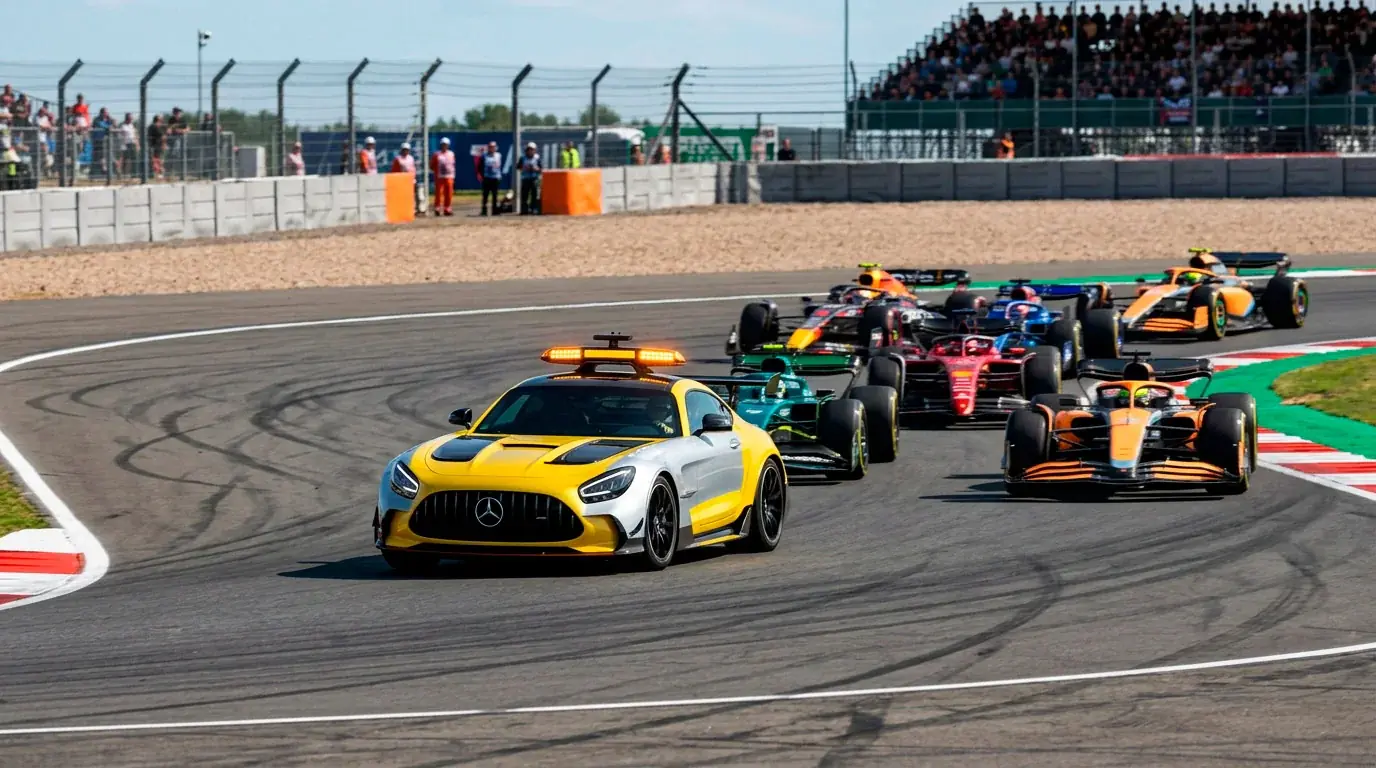
The safety car market is the prop bet I trade most frequently. At its simplest, bookmakers offer a yes/no market on whether a safety car will be deployed during the race. The “yes” side is typically priced short — around 1.30 to 1.50 depending on the circuit — because safety cars appear in roughly 60-70% of modern Grands Prix. That leaves little value in the outright market, but the derivatives are more interesting.
Some operators offer markets on the number of safety car deployments (over/under 1.5 or 2.5), the timing of the first safety car (first half vs second half of the race), and even the cause of the safety car (collision, mechanical failure, weather). These secondary markets attract less betting volume, which means the odds are less efficiently priced. Circuit data is the analytical backbone here. Tracks with tight corners and barrier-lined run-off — Monaco, Jeddah, Baku — produce safety cars at rates 20-30% higher than open-layout circuits with gravel traps. I maintain a simple spreadsheet of safety car frequency by circuit over the past five seasons and use it to benchmark the bookmaker’s implied probability on every safety car prop.
Fastest Lap, Classified Finishers, and Points Markets
The fastest lap market asks which driver will record the quickest single lap during the race. It sounds like it should correlate with overall pace, but it often does not. The fastest lap is typically set in the final stint, sometimes by a driver who pits late specifically to chase the bonus championship point on fresh soft tyres. This means the favourite for the race win is not always the favourite for the fastest lap, and the divergence between those two markets creates opportunities.
Classified finishers is a market that asks how many of the twenty starters will be running at the flag. The over/under line usually sits around 17.5 or 18.5, and the circuit-dependency is pronounced. Street circuits with high attrition rates push the number down; modern permanent circuits with extensive run-off push it up. The 2026 regulations introduced significant changes to power units that may affect reliability patterns, and early-season data will be essential for calibrating this market as the new components settle.
Points-finish markets for individual drivers — will Driver X finish in the top ten? — are where I find the most consistent value among props. These are less glamorous than race-winner bets but far more predictable. A frontrunner from a top team who starts outside the top ten due to a grid penalty will finish in the points roughly 85-90% of the time at high-overtaking circuits. The odds rarely reflect that probability accurately because the market anchors to the grid position rather than the underlying pace.
Constructor Props and Team-Based Specials
Team-focused props are still relatively new and correspondingly mispriced. “Both cars to finish in the points” is the most common, and it rewards analysis of team reliability and consistency rather than individual driver brilliance. A team with two solid drivers and a reliable car — think the kind of outfit that finishes fourth or fifth in the constructors every year — hits this prop far more often than the odds suggest, because the market focuses disproportionately on the top three teams.
Other constructor props include “both cars to finish on the podium,” “at least one retirement from Team X,” and the gap between teammates in the final classification. The teammate gap market is particularly interesting for the 2026 season because several teams have reshaped their driver line-ups, and the early-season data on intra-team dynamics is unreliable. Bookmakers are pricing these based on reputation and pre-season expectations, which means the first four or five races will reveal whether those prices are fair or wildly off.
With 58% of motorsport bettors aged 18 to 34, the demographic that engages most actively with social media narratives, team-based props are influenced by hype cycles. A dominant qualifying performance from one driver can inflate the “both cars on the podium” price for that team even when the other driver’s pace does not support it. Separating team capability from individual highlight reels is the analytical discipline that makes constructor props profitable over a season.
Seasonal Props and the Long View
Beyond individual race weekends, bookmakers offer season-long prop bets that settle after the final Grand Prix. These include total race wins for a driver (over/under), total podiums for a team, whether a specific milestone will be reached (such as a new all-time win record), and which driver will score the most pole positions.
See also: learn the full range of wagers in our F1 betting markets explained article.
I approach seasonal props with the same logic as season specials: pre-season is where the widest value exists, and a secondary window opens after the first few races reveal genuine competitiveness. The key analytical input is historical rate data — how often a driver of this calibre at this level of team achieves the milestone in question. If the bookmaker’s implied probability diverges from the historical rate by more than ten percentage points, I have a position worth taking.
The prop market in F1 is expanding every year as the sport’s audience grows and bookmakers invest in new products. Understanding the mechanics now, while the pricing is still maturing, builds a foundation that compounds as these markets become more central to the F1 betting landscape. Early expertise in props is like early-season investment in a midfield team that turns out to be a championship contender — the odds were there before the rest of the market caught on.
Are F1 prop bets harder to win than race-winner bets?
Not inherently. Many prop bets — particularly points-finish markets and safety car yes/no — have higher hit rates than race-winner bets because they cover a wider range of outcomes. The key is selecting props where your analysis provides a genuine edge over the bookmaker’s pricing rather than choosing randomly from the menu.
Which F1 prop markets offer the best value for beginners?
Points-finish markets and safety car yes/no props are good starting points because they are relatively straightforward to analyse using circuit data and team performance records. They also settle clearly and do not require deep knowledge of tyre strategy or pit-stop dynamics.
Created by the ”Betting f1” editorial team.