Betting on the Monaco Grand Prix: A Circuit Where Qualifying Is Everything
 Available in US
Monaco Breaks Every Betting Rule — and That Is the Point
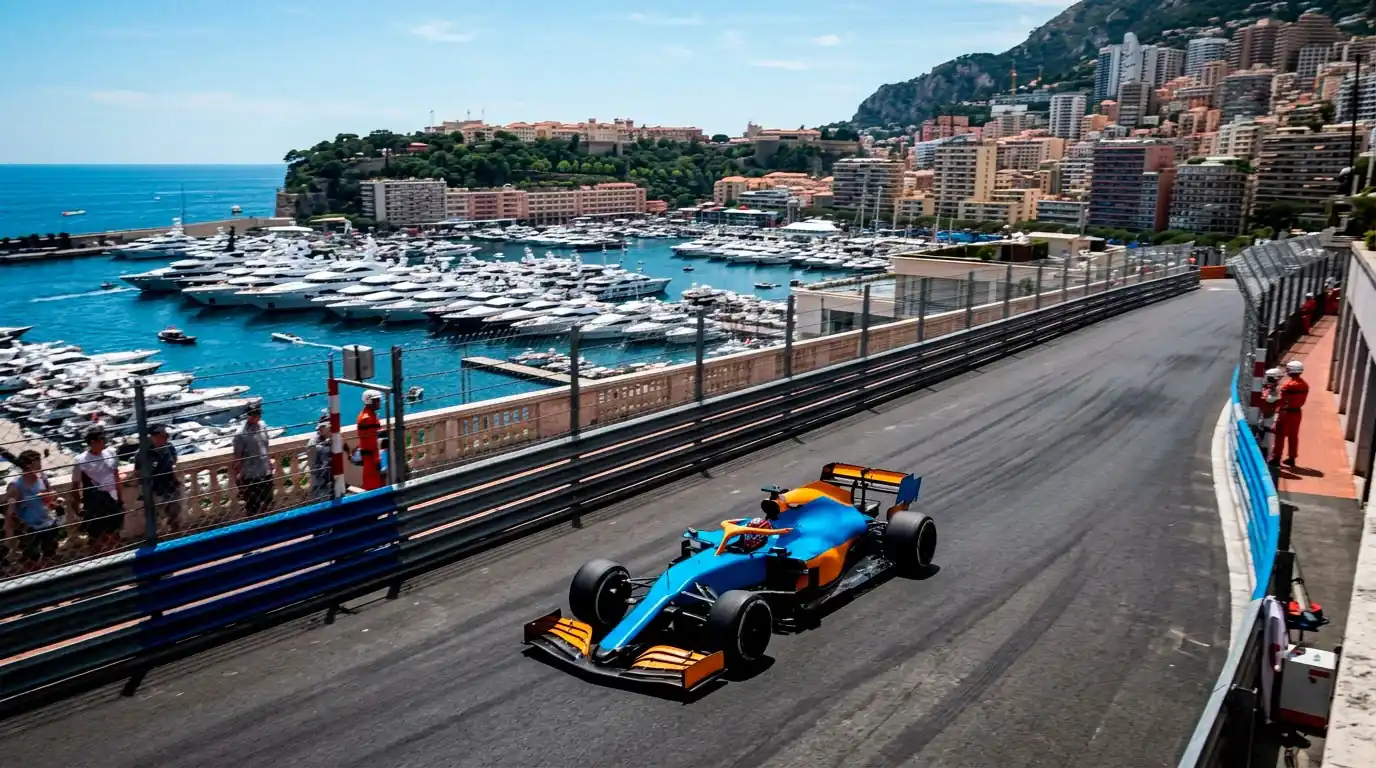
I have been betting on the Monaco Grand Prix for over a decade, and it remains the only race where I throw out my normal framework entirely. Every other circuit on the calendar rewards a balance of qualifying pace and race craft. Monaco rewards qualifying pace and then punishes anyone who tries to make the race interesting. The streets are too narrow for conventional overtaking, the run-off is armco barrier, and the strategic options are limited by the impossibility of gaining time through traffic.
This is not a complaint — it is an analytical advantage. Monaco’s extreme characteristics make it the most predictable race on the calendar in terms of the relationship between grid position and finishing order. Over the past two decades, the pole-sitter has won roughly 40% of the time, and the podium has been drawn from the top six on the grid in the overwhelming majority of races. When a sport that usually defies prediction hands you a pattern this strong, you build your betting around it.
See also: explore betting f1 for the latest F1 betting advice.
Qualifying as the Defining Market
If you are going to bet on one session all weekend in Monaco, make it qualifying. The Saturday afternoon shootout determines the race outcome more directly here than at any other venue. The narrow streets mean that even a car with a two-second pace advantage cannot overtake a slower car without a significant error or strategic miscue from the driver ahead. Position on Saturday is position on Sunday, barring rain or a safety car shuffle.
The qualifying market itself offers value because the session is volatile. One brush with a barrier in Q3 can drop a frontrunner from pole contention to a damaged car in the garage. That volatility pushes qualifying odds wider than they would be at a conventional circuit, creating opportunities in the outright pole position market and in head-to-head qualifying matchups. I focus on drivers with strong Monaco track records — those who have demonstrated they can push to the limit around the Principality without overstepping. Confidence around barriers is a skill, and it is not evenly distributed across the grid.
The correlation between qualifying and race finish is so tight at Monaco that I often skip the race-winner market entirely and concentrate my stake on qualifying props. A top-three qualifier at 2.50 in the qualifying market is effectively a podium bet for the race at better odds than the race podium market typically offers, because the qualifying price does not account for how strongly grid position predicts the race result at this specific venue.
The Safety Car Factor: Monaco’s Great Equaliser
The one variable that genuinely disrupts Monaco’s qualifying-equals-race pattern is the safety car. With barriers lining every metre of track, incidents are common — the safety car has appeared in more than 70% of Monaco Grands Prix over the last decade. When the field bunches up behind the safety car, the positional advantage built in qualifying compresses, pit-stop strategy windows open, and the drivers running on older tyres suddenly face rivals on fresh rubber with no gap to protect.
This is where the interesting betting angles emerge. A safety car at Monaco does not just change the race — it creates an entirely different race from the one the odds were pricing. The pre-race favourite who qualified on pole and was expected to cruise home now faces a restart with a hungry rival on softer tyres right behind them. I build conditional scenarios before every Monaco race: what happens if the safety car comes out before lap 20? Between laps 20 and 40? After lap 40? Each scenario shifts the probability distribution for the podium differently, and my betting reflects the weighted average of those scenarios.
Safety car deployment markets themselves are typically priced around 1.25 to 1.35 for “yes” at Monaco, which leaves little outright value. The value is in the second-order effects — how a safety car changes position markets, head-to-head matchups, and the fastest-lap market. Monaco is often described as “the race that rewards the brave and punishes the reckless,” and the safety car is the mechanism that turns that observation into concrete betting opportunities.
Strategy in a Cage: Pit Stops and Tyre Choices
Conventional tyre strategy barely applies at Monaco. The low-speed corners and relatively smooth surface produce relatively low degradation, and the catastrophic cost of losing position during a pit stop means most teams delay stopping as long as mechanically possible. One-stop races are the norm, and two-stop strategies are vanishingly rare unless forced by a puncture or damage.
What matters for betting purposes is the undercut — the tactic of pitting slightly earlier than a rival to gain time on fresh tyres and emerge ahead when they make their own stop. The pit lane at Monaco is short, which limits the time lost compared to longer pit lanes at Silverstone or Spa. A well-timed undercut can steal a position without any on-track overtaking, and it is the primary mechanism through which the running order changes during dry Monaco races. I watch FP2 long-run data specifically for tyre degradation differentials between drivers running close together, because that data predicts undercut vulnerability more accurately than any pre-race model.
The narrow strategy range also affects accumulator and bet builder approaches. At most circuits, I avoid combining race-winner and fastest-lap legs because they pull in different directions. At Monaco, the leader often does set the fastest lap because there is no pressure from behind, making that combination more viable than it would be elsewhere — a rare instance where the circuit’s peculiarities actually improve a multi-leg bet’s probability.
Reading Monte Carlo’s Microclimate for an Edge
Monaco sits in a microclimate where the Mediterranean coast meets the hillside, and localised rain showers can arrive with little warning from broader weather models. I check hyperlocal forecasts from Monaco-based weather stations rather than relying on the regional predictions that most previews reference. A 30% chance of rain in the broader Côte d’Azur forecast might translate to 50% over the circuit itself because of the hillside geography funnelling moisture toward the harbour.
See also: apply track-specific analysis with our F1 circuit betting strategy guide.
When rain does arrive, Monaco transforms from the most predictable race on the calendar to one of the least. Overtaking becomes possible because the slower cars struggle more on a slippery surface, and the risk of barrier contact spikes. Wet Monaco races produce outlier results — Olivier Panis winning from fourteenth on the grid in 1996 remains the iconic example — and the odds in race-winner and podium markets often do not fully reflect the chaos that rain introduces.
The 827 million F1 fans worldwide make Monaco one of the most-watched sporting events of the year, and that enormous audience drives heavy betting volume. More volume from casual bettors means the odds reflect popular narrative rather than analysis — which driver looked fastest in the sunshine of FP3, which team had a good result last weekend. That narrative-driven pricing is your edge if you have done the preparation on qualifying records, safety car probabilities, and weather models that the majority of the market has not.
Is the Monaco Grand Prix the hardest race to bet on?
In some ways it is the easiest because the qualifying-to-race correlation is so strong. The difficulty lies in the safety car variable, which can upend the predicted order. If you approach Monaco as a qualifying-focused betting event with safety car contingencies built in, it becomes one of the more analytically tractable races on the calendar.
Should I bet on the race winner or qualifying at Monaco?
Qualifying markets often offer better value because the odds do not fully account for how directly Saturday’s result determines Sunday’s outcome at this circuit. A top-three qualifying bet can function as a de facto podium bet at more attractive odds.
How does rain change Monaco betting strategy?
Rain disrupts the qualifying-equals-race pattern by making overtaking possible and increasing incident probability. If rain is forecast with more than 40% likelihood, consider widening your selections to include midfield drivers who perform well in wet conditions and reducing your stake on pole-position-dependent bets.
Prepared by the Betting f1 editorial staff.