How Weather Affects F1 Betting: Rain, Wind and Market Volatility
 Available in US
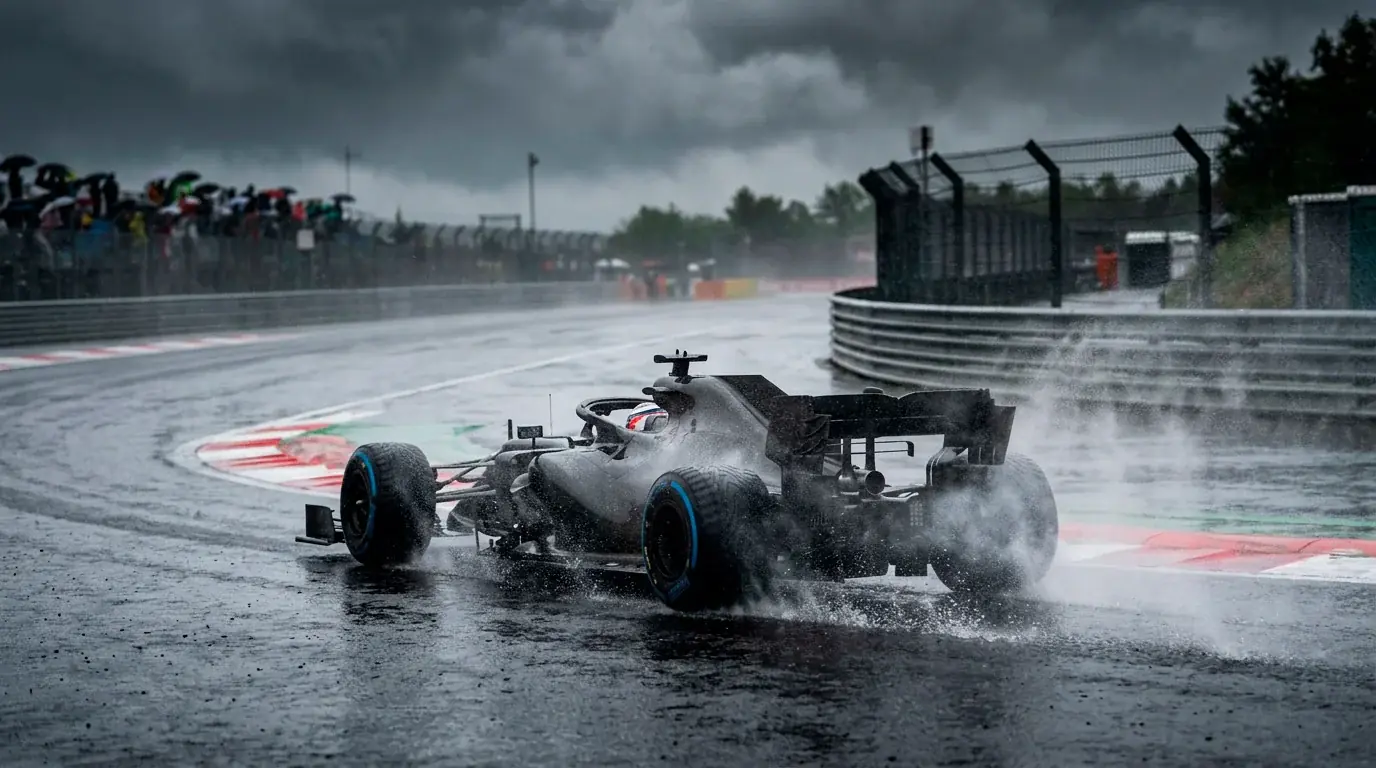
When the Sky Opens, So Do the Odds
I was tracking the odds for the 2024 Brazilian Grand Prix when the forecast flipped from dry to heavy rain about four hours before lights out. The race winner market exploded — the pre-race favourite drifted from 2/1 to 7/2 inside thirty minutes, and a midfield driver who excels in the wet shortened from 25/1 to 8/1. That kind of repricing does not happen in any other sport on such a compressed timescale, and it is the reason I treat weather as the single most powerful external variable in F1 betting.
Rain changes everything. It neutralises car advantage, amplifies driver skill, and introduces tyre choice decisions that can make or break a race. The 827 million fans who follow F1 worldwide know that a wet race is appointment viewing — unpredictable, dramatic, and full of the kind of chaos that makes a twenty-driver grid feel like a lottery. For bettors, that chaos is not randomness. It is repriced probability, and if you understand how weather shifts the odds, you can position yourself before the market catches up.
See also: head to betting f1 for the latest F1 race analysis.
How Bookmakers Reprice F1 Markets When Rain Arrives
The mechanics of weather repricing are straightforward once you understand the chain reaction. Rain hits the forecast. The probability distribution of the race winner market widens — the favourite’s implied probability drops, and the implied probability of midfield and rear-grid drivers rises. Prop markets like safety car “yes” shorten dramatically because wet races produce incidents at roughly double the rate of dry races. Each-way value increases because the podium is genuinely up for grabs when the track is soaked.
What most punters miss is the timing. Bookmakers do not reprice the moment a rain cloud appears on the radar. They wait for confirmation — typically when the official race-weekend weather forecast (published by the FIA’s meteorological partner) shifts from “dry” to “30 per cent chance of rain” or higher. That confirmation lag creates a window. If you are monitoring independent weather services — particularly those with radar resolution fine enough to track storm cells hour by hour — you can identify a rain threat before the bookmaker adjusts. A 15-minute lead on the market is enough to lock in pre-rain odds on the selections that benefit most from wet conditions.
Wind is the quieter weather variable. It does not trigger the dramatic repricing that rain does, but it matters for qualifying markets and fastest-lap props. A strong headwind on the main straight reduces top speeds and changes braking points, which benefits cars with superior downforce over those with straight-line speed. At exposed circuits like Silverstone or Zandvoort, wind direction shifts between practice and qualifying can shuffle the competitive order. The bookmakers do not price wind at all in most markets, which makes it a free informational edge for anyone willing to check the hourly forecast.
Wet-Weather Drivers: The Edge Hidden in Career Data
A mate of mine backs the same driver every time rain is forecast, regardless of car performance. His logic is simple: some drivers are demonstrably better in the wet, and that skill differential is wider than the car performance gap. He is not wrong, but the edge only works when the market has not already priced in the wet-weather reputation.
Career wet-race data is publicly available and surprisingly predictive. Certain drivers have win rates in the wet that are two to three times their dry-race win rates relative to their car’s expected performance. That is not luck across a career spanning 50 or more wet sessions — it is a genuine skill advantage rooted in car control, confidence on a low-grip surface, and the ability to read changing conditions faster than rivals.
The trap is backing the obvious wet-weather specialist after the market has already adjusted. Once rain is confirmed, the bookmakers shorten the odds on known rain masters, and the value evaporates. The edge comes from identifying the less obvious wet-weather performers — drivers whose qualifying pace improves disproportionately in mixed conditions or who gain more positions on lap one of a wet race than their grid position would predict. That data requires digging into session-by-session results rather than headline statistics, but the effort pays in the form of odds that have not been compressed by public perception.
New driver pairings in 2026 introduce fresh uncertainty. A driver’s wet-weather ability in a previous car does not always transfer to a new team’s chassis and setup philosophy. The first wet race of the season for a new pairing is essentially a pricing reset — the bookmakers are guessing, the data is absent, and the market is as soft as it will be all year. That is when patient bettors who tracked the driver’s wet-weather form in prior seasons get their best prices.
Intermediate vs Wet Tyres: The Strategy Bet Within the Weather Bet
F1 is not just “dry or wet.” It is a spectrum, and the tyre choice along that spectrum is where the real betting intelligence lies. Pirelli supplies three rain tyre options — the intermediate (for a damp but drying track), the full wet (for standing water), and the dry compounds that come into play if the track dries. The transition between these compounds is the most strategically rich moment of any rain-affected race.
The crossover point — when intermediate tyres become faster than full wets, or when dry slick tyres become faster than intermediates — decides races. The team that reads the crossover correctly and pits at the right moment gains 20 to 40 seconds over a rival that pits a lap too early or too late. In live F1 betting markets, the crossover pit stop is the single most impactful event. Odds swing violently when a leading driver pits for slicks on a drying track and the gap to second place shrinks or expands depending on whether the gamble works.
For pre-race betting, the relevant question is not just “will it rain” but “what type of rain.” A persistent drizzle that keeps the track damp throughout produces a processional intermediate-tyre race with fewer overtakes and fewer upsets. A heavy downpour that stops mid-race produces the crossover chaos that shuffles the grid. A brief shower followed by rapid drying produces the highest variance of all, because the timing of the switch to slicks is a knife-edge decision. Each scenario has a different impact on the probability distribution, and lumping them all into “wet race” misses the nuance that separates a good weather bet from a guess.
Building a Weather-Responsive Betting Framework
US sports wagering revenue hit $13.71 billion in 2024, up 25.4 per cent year-on-year, and F1’s growing American audience is bringing a more analytical approach to race-day betting — including weather modelling. You do not need a meteorology degree to build a weather-responsive betting framework, but you do need a process.
See also: apply weather knowledge to evening events with our F1 night race betting guide.
Start 48 hours before the race with a baseline forecast from two or three independent weather services. Compare them. If they agree on dry conditions, the weather variable is off the table and you price the race as normal. If they disagree, or if any service shows rain probability above 40 per cent, the weather variable is live and you need a contingency plan: which selections benefit from rain, which suffer, and at what odds the rain scenario becomes a positive-expectation bet.
On race morning, narrow the window. Hourly forecasts and radar imagery within three hours of the start give you actionable precision. A storm cell 50 kilometres from the circuit, moving at 30 kilometres per hour, will arrive in under two hours. That is a bankable rain threat, and if the market has not fully adjusted, it is your entry point. The key discipline is separating “rain is possible” from “rain is probable.” Only the second scenario justifies repositioning your bets, because the odds adjustment for “possible” rain is too small to overcome the bookmaker’s margin.
How far in advance should I check the weather forecast before placing an F1 bet?
Start monitoring 48 hours before the race to identify trends, but do not commit to weather-dependent bets until race morning. Hourly forecasts and radar imagery within three hours of the start provide the most actionable precision. The goal is to identify a high-probability rain scenario before the bookmaker fully reprices the market — a window that typically lasts 15 to 30 minutes once a credible rain threat emerges.
Do wet races genuinely produce more upsets for F1 betting?
Rain significantly widens the probability distribution of race outcomes. The favourite’s win probability drops because car performance advantages are partially neutralised by reduced grip, while driver skill in wet conditions and tyre strategy decisions become more influential. Historically, wet races produce podium finishers from further down the grid than dry races, which increases the value of each-way and outsider bets.
Published by the Betting f1 team.