F1 First Retirement and DNF Markets: The Reliability Data That Pays
 Available in US

Betting on the Car That Will Not Make It Home
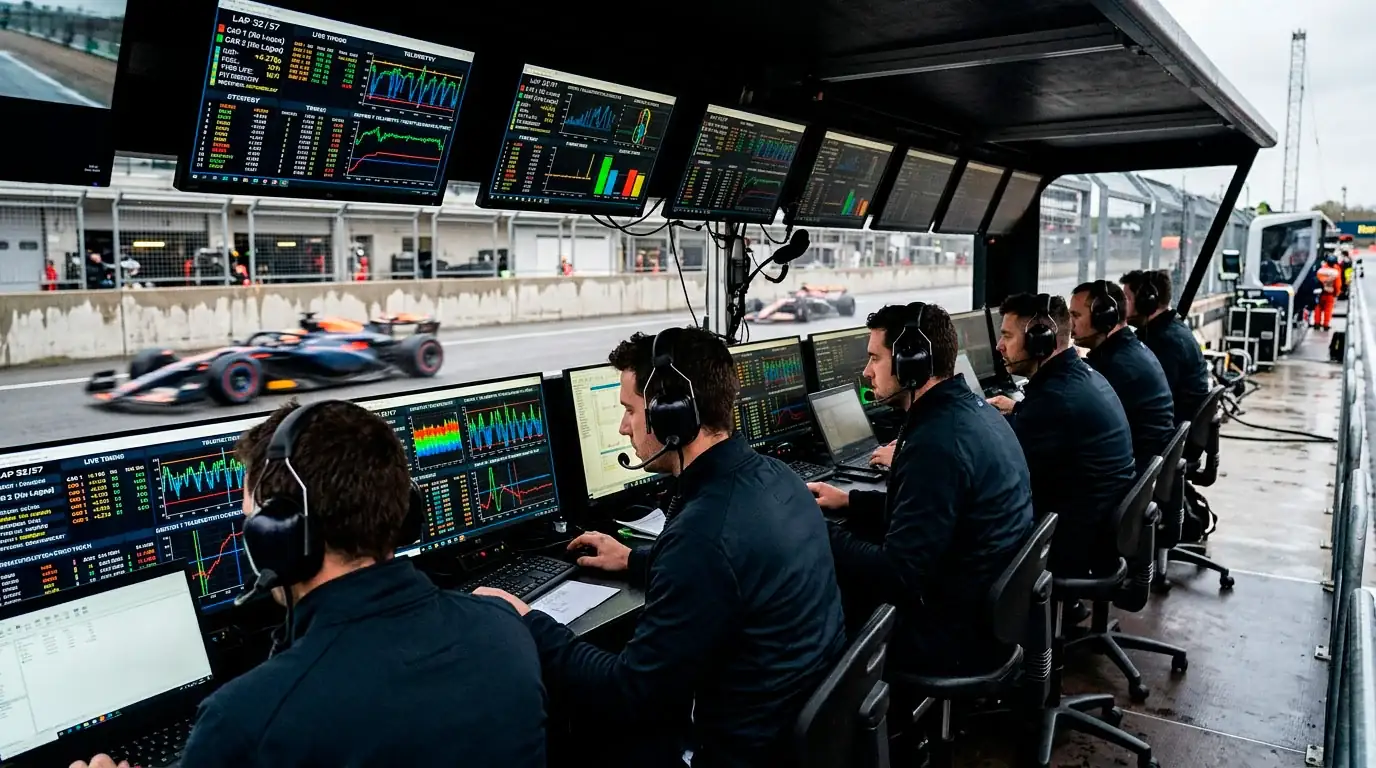
There is something counterintuitive about placing a bet on a car not finishing a race. It feels pessimistic, almost unsporting. But the first retirement market — betting on which driver will be the first to leave the race — is one of the most data-driven props in F1, and the bettors who take it seriously consistently outperform those who treat it as a novelty. Every race weekend produces at least one retirement on average, and the patterns behind those retirements are far more predictable than the casual observer assumes.
F1’s fanbase of 827 million watches races hoping for drama, and a retirement is drama in its purest form. For the bettors within that audience, the first retirement market converts the mechanical and operational fragility of a racing car into a wagerable proposition. The market typically lists every driver with individual odds, and the favourite for first retirement is usually priced around 5/1 to 8/1 — long enough to generate attractive returns if you have done the homework on reliability data.
See also: browse betting f1 for all F1 driver-related markets.
Understanding What Causes Retirements and How to Price Them
I categorise F1 retirements into three buckets: mechanical failures, driver incidents, and team errors. Each has different predictors and different implications for the betting market.
Mechanical failures — engine blowouts, gearbox failures, hydraulic leaks — are the most predictable category because they correlate with component age and mileage. F1’s power unit allocation rules give each driver a limited number of engines, turbochargers, MGU-H units, MGU-K units, energy stores, and control electronics per season. As a driver approaches the maximum allocation, the components accumulate mileage and stress. A power unit on its sixth race weekend is statistically more failure-prone than one on its second. Tracking component allocations through the season — data that F1 publishes officially — gives you a reliability model that the bookmakers only partially incorporate.
Driver incidents — crashes, collisions, track excursions that end the race — correlate with grid position (first-lap incidents disproportionately affect drivers starting in the mid-pack where the field is congested), circuit characteristics (street circuits produce more terminal incidents), and individual driver profiles. Some drivers have measurably higher incident rates than others, particularly in their first season or at unfamiliar circuits. That individual risk profile is public data, but the bookmakers smooth it across the field rather than modelling each driver’s propensity separately.
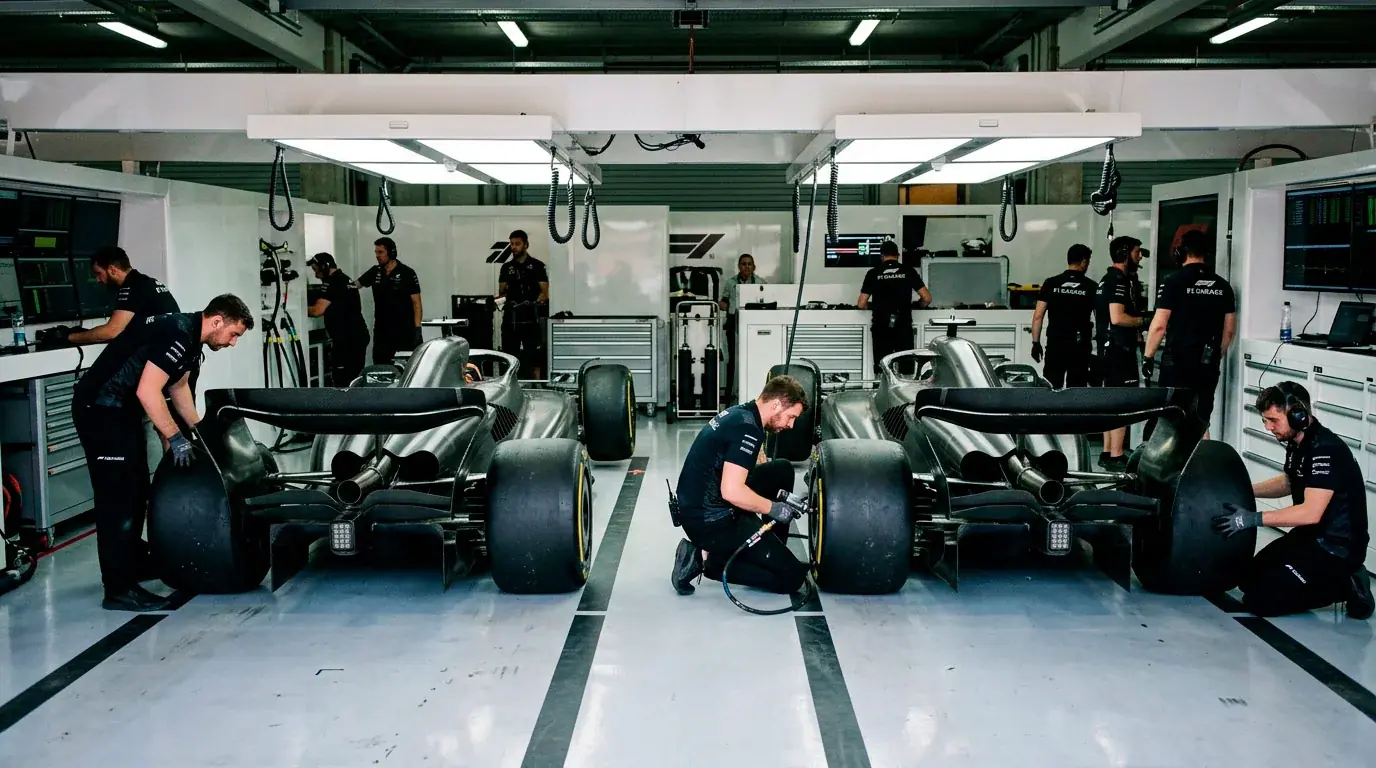
Team errors — unsafe releases, pit equipment failures, strategy calls that destroy a race — are the hardest to predict but not random. Teams with high staff turnover, recent management changes, or a history of operational mistakes carry a higher error rate. The correlation between F1 viewership growth and betting volume (r=0.85) means more eyes are watching these errors happen in real time, but the pre-race market does not price team operational competence with the granularity it deserves.
First Retirement vs Any Retirement: Different Markets, Different Value
The first retirement market settles on which driver is the first to stop racing, regardless of the reason. The “any retirement” market (sometimes offered as a yes/no prop on individual drivers) settles on whether a specific driver fails to finish. These are distinct markets with different analytical requirements.
First retirement is a competitive market — you are picking one driver from twenty, and the pricing reflects the full-field probability distribution. The value is in identifying the driver with the highest absolute retirement probability at that specific circuit, on that specific weekend, with that specific component age. The “any retirement” prop is simpler — you are assessing whether a single driver’s retirement probability exceeds the implied probability in the offered odds.
I lean towards the first retirement market because the pricing is more generous. The favourite for first retirement is typically offered at 5/1 to 8/1, reflecting the difficulty of picking one from twenty. But if your reliability model identifies a driver with a 20 per cent retirement probability (due to high-mileage components and a crash-prone circuit) while the rest of the grid averages 5 per cent, that driver’s first-retirement probability is significantly higher than the 12-15 per cent implied by the 5/1-8/1 range.
Building a Reliability Model From Publicly Available Data
You do not need proprietary team data to build a useful retirement model. The inputs are all publicly available: FIA technical delegate reports (showing component allocations and changes), practice session data (unusual stoppages, engine cover removals, team radio messages about temperatures or pressures), historical DNF rates by team and by circuit, and weather forecasts (extreme heat increases mechanical stress, rain increases incident probability).
The model does not need to be complex. A simple scoring system works: assign risk points for high-mileage power unit components, for circuit type (street = higher incident risk), for grid position (mid-pack start = higher first-lap incident risk), and for team-specific reliability history. Sum the risk points for each driver, rank them, and compare against the bookmaker’s implied ranking. The drivers where your model ranks the retirement risk higher than the bookmaker’s ranking are the value bets.
Fifty-eight per cent of motorsport bettors are between 18 and 34, and this demographic is comfortable with data-driven approaches. The reliability model rewards that mindset — the edge is systematic, repeatable, and grows more precise as the season progresses and more component data accumulates. By the final five races of the season, when power unit mileages are at their highest and the pressure to avoid grid penalties is intense, the first retirement market becomes one of the most exploitable props on the F1 card.
See also: explore transfer-related wagers in our F1 driver market betting article.
The 2026 Power Unit and Reliability Uncertainty
The 2026 technical regulations introduce a fundamentally new power unit architecture with a 50/50 split between internal combustion and electrical energy. New power units mean new failure modes. The MGU-H is eliminated, the battery capacity increases, and the electrical motor (MGU-K) carries a significantly higher energy load. No team has raced this specification before, which means the historical reliability baselines are partially invalidated.
For 2026 rule change bettors, the early-season retirement market is a prime target. First-year power unit architectures historically produce higher failure rates than mature designs, and the 2026 units represent the biggest technical reset since the hybrid era began in 2014. Some teams will nail the reliability earlier than others, and the early-season retirements will reveal which ones. The first retirement market in the opening three or four races of 2026 is likely to offer wider value than any comparable period in recent seasons, simply because the uncertainty is so much greater.
How can I predict which F1 driver is most likely to retire from a race?
Track power unit component mileages using FIA technical reports — high-mileage engines and gearboxes fail more often. Factor in circuit type (street circuits produce more terminal incidents), grid position (mid-pack starts carry higher first-lap crash risk), and team-specific reliability history. A simple scoring model combining these factors and comparing against the bookmaker’s implied ranking identifies value bets in the first retirement market.
What is the first retirement market in F1 betting?
The first retirement market asks you to pick which driver will be the first to stop racing, whether through mechanical failure, crash, or team error. Each driver is listed with individual odds, typically with the favourite priced at 5/1 to 8/1. Settlement is based on the official race classification — the first driver classified as ‘retired’ is the winner. If all drivers finish, the market is voided at most sportsbooks.
Prepared by the Betting f1 editorial staff.