
Handicap Betting in F1: Position Spreads and Alternative Markets
 Available in US
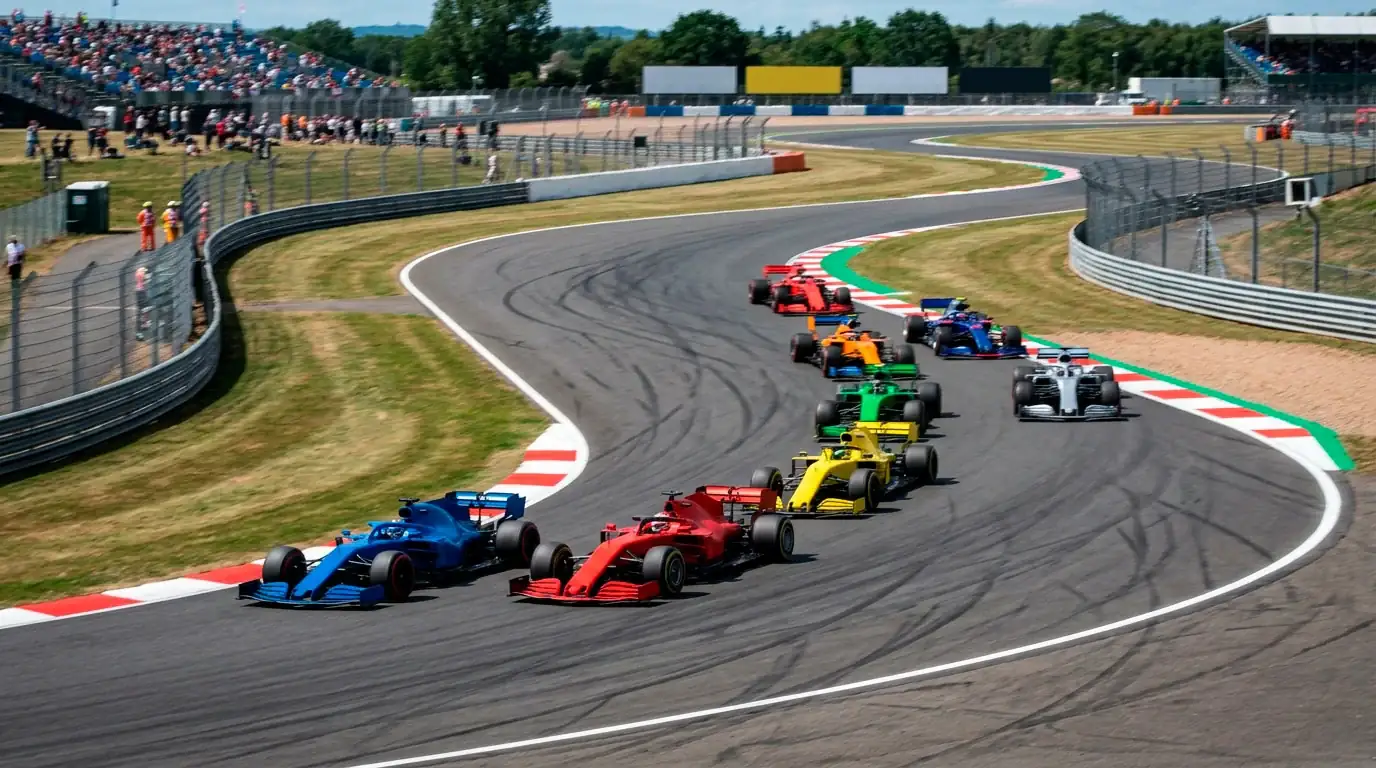
What Handicap Betting Looks Like When There Are Twenty Runners
Handicap betting made its name in football, where adding or subtracting goals to one team’s tally transforms a predictable fixture into a balanced proposition. In F1, the concept translates differently — and arguably more interestingly — because the finishing positions of twenty individual runners offer far more granularity than a binary match result. A position handicap asks whether a driver can beat their expected finishing position by a given margin, and that reframing turns even a dominant season into a market full of betting value.
The concept arrived in F1 betting relatively recently. As the sport’s fanbase grew to 827 million, bookmakers looked for new products to attract the crossover bettors flowing in from football and basketball, where handicap and spread betting are staples. The result is a small but expanding set of position-spread markets that most F1 punters have never explored — which, from a value perspective, is exactly the situation you want to be in.
How Position Spreads Work in Practice
A position spread assigns a driver a handicap expressed in grid places. Say a bookmaker offers Lewis Hamilton at a spread of +2.5 for a race where he qualifies third. The bet settles on his finishing position minus the spread: if he finishes first, his spread-adjusted position is 1 + 2.5 = 3.5, which is better than his starting position of 3 — you win. If he finishes fifth, his adjusted position is 5 + 2.5 = 7.5, which is worse than third — you lose.
The mechanics differ slightly between operators. Some use whole-number spreads (plus or minus 2, 3, 5 positions) with dead-heat rules for exact matches. Others use half-position spreads (plus or minus 2.5, 3.5) to eliminate the push, similar to Asian handicap lines in football. I strongly prefer the half-position format because it produces a clean win or loss on every bet, simplifying tracking and bankroll management.
The baseline for the spread is usually the driver’s grid position, though some operators anchor it to the pre-race odds-implied finishing position instead. The distinction matters. A driver who qualifies tenth but whose race pace suggests a top-five finish will have a very different value proposition depending on whether the spread is anchored to tenth (generous) or fifth (fair). Always check the reference point before placing the bet.
Where the Value Sits in F1 Handicap Markets
The most productive handicap angles involve drivers who are likely to move significantly forward or backward from their grid position. Grid penalties are the obvious catalyst — a frontrunner starting fifteenth due to an engine change creates a spread bet with strong directional conviction. But the less obvious angles are often better priced because they require analytical work the casual market does not perform.
Drivers in cars with strong race pace but weak one-lap qualifying speed are systematically undervalued on negative spreads (those requiring the driver to beat their grid position). A team that is consistently half a second slower in qualifying than in race trim will start further back than their race performance warrants, and the spread odds do not always account for this discrepancy. I identify these drivers by comparing qualifying position to race finish position across the first five or six races of the season, looking for consistent improvers.
Conversely, teams that qualify flatteringly well but cannot maintain that pace over a full race distance — particularly in high-degradation conditions — are overvalued on positive spreads. A driver who qualifies fourth but typically finishes seventh or eighth is a candidate for a bet against them on a spread of minus 2.5 from grid position. The market prices qualifying heroics; the data prices race reality. With only 22% of F1 bettors specifically wagering on motorsport, there is less specialist knowledge in these markets than in equivalent football handicap lines.
Spread Betting vs Fixed-Odds Handicaps: Know the Difference
Some operators offer true spread betting on F1, where your profit or loss scales with how far the actual result deviates from the spread. If the spread is set at a finishing position of 5.0 and the driver finishes first, you win four units multiplied by your stake per position. If they finish tenth, you lose five units times your stake. The leverage cuts both ways, and a single bad result — a first-lap retirement pushes the finishing position to twentieth — can produce a catastrophic loss.
I have burned my fingers on true spread betting in F1 and now exclusively use fixed-odds handicap markets, where the spread is expressed as a single position adjustment and the payout is fixed regardless of the margin. The risk profile is completely different. A fixed-odds handicap bet can lose you only your stake, while a spread bet on a driver who retires from the race can cost you fifteen or more units in a single wager. For a sport where mechanical retirements, collisions, and first-lap incidents are relatively common, the uncapped downside of spread betting is a structural risk that I do not think compensates for the additional profit potential.
If you do explore true spread betting, the non-negotiable rule is position-level stop losses. Set a maximum loss per bet before placing it, and do not adjust the stop during the race. The temptation to “ride it out” when your driver drops positions is the same psychological trap as chasing losses in any other market, and it is amplified by the real-time nature of watching the race unfold.
Combining Handicaps With Other Market Types
Handicap positions do not exist in isolation — they interact with every other F1 market. A driver on a negative spread (expected to gain positions) is also a candidate for head-to-head bets against drivers starting nearby on the grid. A driver on a positive spread (expected to lose positions) is someone to bet against in podium or top-six markets. The handicap analysis provides a directional thesis that you can express through whichever market offers the best price.
I use handicap thinking as a filter even when I do not place an actual spread bet. Before every race, I estimate each driver’s likely finishing position relative to their grid slot, then compare that estimate to the bookmaker’s implied finishing positions across the race-winner, podium, and top-ten markets. Where my position estimate diverges from the market’s implied position by three or more places, I have a candidate for further analysis. The handicap framework turns position-change data into a structured, repeatable process for identifying value across the entire betting menu.
For a more detailed look at how circuit characteristics influence position movement, the analysis in our circuit betting strategy guide provides the track-level data that handicap bettors need to calibrate their spreads accurately.
Is handicap betting on F1 available at all UK bookmakers?
Not all operators offer dedicated F1 handicap or position-spread markets. The larger sportsbooks with extensive motorsport coverage are more likely to carry them, particularly for high-profile Grands Prix. Spread betting firms also cover F1 but with a different risk structure — check whether the product is fixed-odds or true spread before committing.
What is the biggest risk with F1 spread betting?
The uncapped loss potential on true spread bets is the primary risk. A driver retirement can push the settled position to twentieth, creating a loss of fifteen or more units from a single bet. Fixed-odds handicap markets eliminate this risk by capping your loss at the original stake.
How do I decide whether to use a positive or negative handicap?
Analyse the driver’s historical grid-to-finish-position data at the specific circuit. Drivers who consistently gain positions from their grid slot suit negative handicaps. Drivers who typically lose positions — strong qualifiers with weaker race pace — suit positive handicaps or bets against them on the spread.
Prepared by the Betting f1 editorial staff.