F1 Winning Margin and Interval Betting: Gap-Based Markets Explained
 Available in US
The Race Gap Nobody Watches — Until There Is Money on It
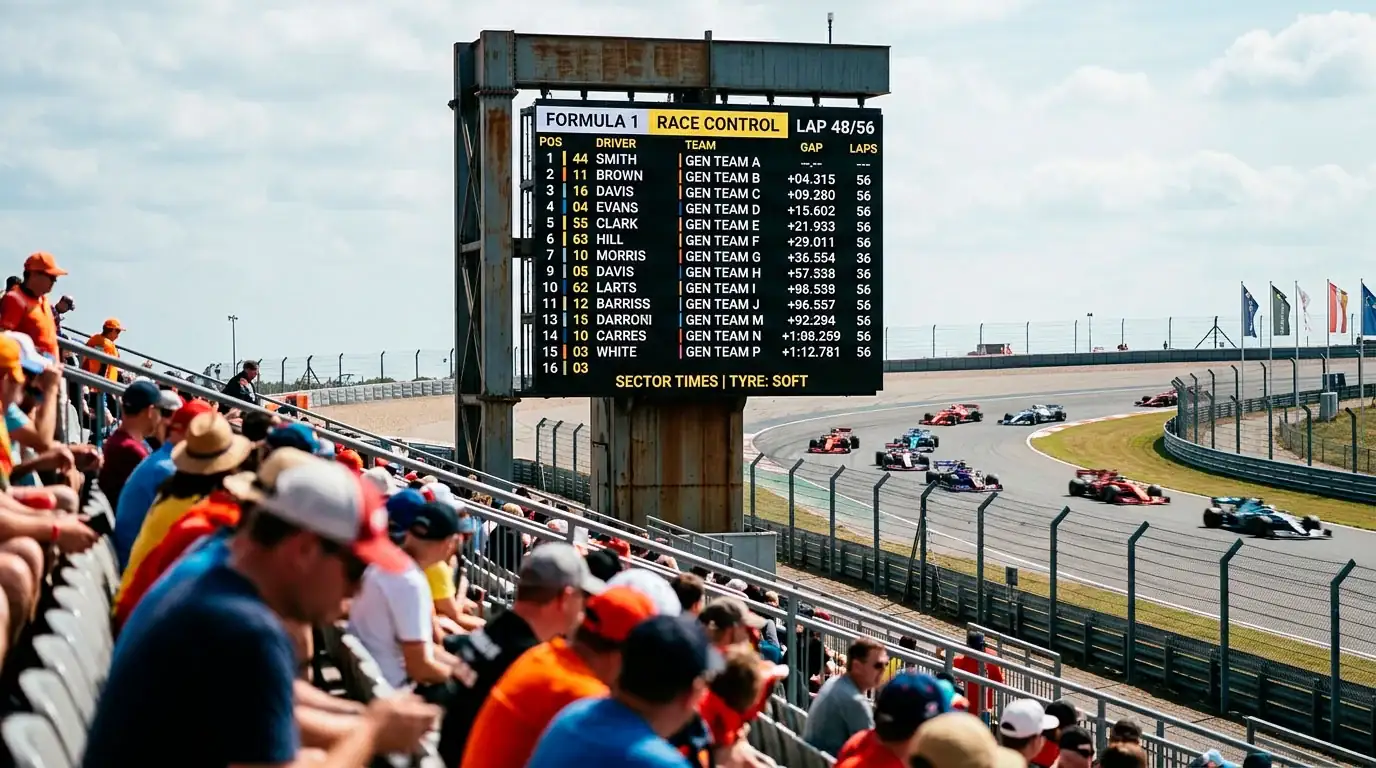
You have probably noticed the time gap that appears next to each driver’s name on the race leaderboard. Most viewers use it to judge how competitive the race is. I use it to settle bets. The winning margin market — how far ahead the race winner finishes — is one of the most underexplored props in F1 betting, and its pricing reveals a consistent misunderstanding of how F1 races actually unfold.
The typical winning margin in modern F1 ranges from less than a second in a close finish to over 20 seconds in a dominant display. That spread makes the over/under line set by the bookmaker — usually around 5.5 to 8.5 seconds depending on the circuit — a genuine analytical challenge. The margin is not random. It is determined by the pace gap between the top two cars, the strategy interaction between them, and the safety car lottery. Each of those factors is at least partially predictable, which is what makes this market interesting.
See also: head to betting f1 for more F1 result markets.
What Determines the Winning Margin at Different Circuits
At power circuits with long straights and DRS zones, the winning margin tends to be smaller because the second-place driver can stay within DRS range and apply pressure throughout the race. The aerodynamic tow on a long straight keeps the gap manageable even when the leading car is faster. Monza, Spa, and Baku typically produce winning margins under 5 seconds because the track layout prevents the leader from building an insurmountable gap.
At high-downforce circuits with limited overtaking opportunities — Hungary, Monaco, Singapore — the winning margin is a direct function of the pace gap between the first and second car multiplied by the race distance. If the leading car is three-tenths per lap faster and the race is 70 laps, the raw pace gap produces a 21-second margin before you account for dirty air, tyre management, and strategic considerations. The bookmaker’s over/under line at these circuits tends to be set higher, but the adjustment is often insufficient. I have found that backing “over” on the winning margin at tracks where the pace gap is clear and overtaking is difficult has been positive expectation across four consecutive seasons.
Safety cars compress the gap to zero. A single safety car deployment erases whatever margin the leader had built, resetting the race to a standing-start scenario. This is the primary risk factor for “over” bets on the winning margin. Circuits with high safety car rates — above 70 per cent historically — are poor candidates for winning margin overs because the probability of a gap reset is too high. Conversely, circuits with low safety car rates and clear pace hierarchies are ideal. The safety car data you track for that market feeds directly into the winning margin analysis.
Interval Betting: The Gap Between Specific Positions
Some bookmakers extend the margin concept beyond just the winner, offering interval markets between specific finishing positions. The gap between first and second is the headline market, but the gap between third and fourth, or between tenth and eleventh (the points cutoff), can also be offered. These niche markets carry thin liquidity and wide bookmaker margins, but the pricing is correspondingly softer.
The third-to-fourth gap is the most interesting interval for betting because the podium positions often crystallise early while the battle for fourth remains fluid. If the top three cars are clearly ahead of the field after qualifying, the interval between third and fourth will be large (10+ seconds is common), and the over/under line on that interval is typically underestimated by the bookmaker. The reason: the bookmaker prices the third-to-fourth gap as a compressed version of the overall pace spread, but in practice the top-three teams often pull away as a group while the midfield forms a separate race. The actual gap is bimodal — either very small (when the fourth-place car is close to the podium battle) or very large (when it is not). Bimodal distributions are notoriously hard for a single over/under line to capture.
Live Margin Trading: Watching Gaps in Real Time
The average Grand Prix draws 76.1 million viewers, and the live timing data those viewers can access is sophisticated enough to support real-time margin analysis. During the race, the gap between the leader and second place fluctuates with pit stops, tyre degradation, and traffic. If you are trading the winning margin market in-play, the gap at the halfway point of the race is the most predictive data point for the final margin.
The pattern is consistent: the gap at half-distance correlates with the final margin at roughly r=0.65 across a season, but the direction of the deviation depends on the strategy phase. If the leader has not yet made their second pit stop, the apparent gap overstates the likely final margin because the second stop will temporarily close it. If both drivers have made their final stops and the gap is established, the correlation jumps to r=0.85 because the remaining variable is just pace differential and tyre degradation.
In-play margin bets are most valuable during the “clean air phase” after the final round of pit stops. At that point, the gap is real — both drivers are on their final tyres, the fuel loads are equalised, and the remaining laps will either extend or compress the gap based on pure pace. If the gap is 8 seconds with 15 laps to go and the over/under line was set at 6.5 seconds, the “over” has moved from a pre-race probability estimate to a near-certainty that the in-play odds may not yet reflect.
The Margin Market in Context: A Portfolio Piece, Not a Standalone
I do not bet the winning margin market in isolation. It works best as part of a race-weekend portfolio that includes a directional bet (race winner or H2H), a prop (safety car or fastest lap), and a margin position. The margin bet adds a dimension that is uncorrelated with the winner bet — you can back Driver A to win and simultaneously bet “under” on the winning margin if you expect a close race. That diversification smooths the variance of a race weekend and generates returns from multiple independent analytical inputs.
See also: predict top-three finishes with our F1 podium finish betting guide.
The UK gambling industry’s GGY of 11.5 billion pounds reflects a market where sophisticated multi-market approaches are increasingly common. The winning margin market is tailor-made for this kind of portfolio thinking, because it prices a dimension of the race that most other markets ignore entirely. The race winner market prices who wins. The podium market prices who finishes top three. The margin market prices how they win. That orthogonality is the analytical advantage.
What determines the winning margin in an F1 race for betting purposes?
Three main factors: the pace gap between the first and second-place cars (visible from practice long-run data), the circuit’s overtaking opportunities (which determine whether the second car can stay close), and safety car probability (which resets the gap to zero). High-downforce circuits with limited overtaking and low safety car rates produce the largest margins. Power circuits with DRS zones and street circuits with high safety car rates produce smaller margins.
How is the F1 winning margin bet typically structured?
Most bookmakers offer an over/under line on the gap in seconds between the race winner and the second-place finisher. The line is usually set between 5.5 and 8.5 seconds depending on the circuit. You bet whether the actual margin will be larger (over) or smaller (under) than the line. Some sportsbooks also offer interval markets on gaps between other specific positions, such as third-to-fourth or the points cutoff between tenth and eleventh.
Published by the Betting f1 team.